
Last updated: November 01, 2026
Quick Answer: ExpaDevs platform and website strategy should be decided by the product’s main job, and in many software cases the fastest path is still to choose one primary role rather than split the site evenly. ExpaDevs platform and website strategy comes down to one decision: should the product page act as a self-serve software platform, or should the site stay a sales and credibility engine that funnels qualified buyers into demos? For a software company, that choice shapes onboarding, lead quality, content structure, and how much support the business has to carry after the first visit.
I write on ExpaDevs platform and website strategy with a bias toward decisions that survive procurement, implementation, and the second round of stakeholder questions, but for specific architecture or compliance choices, consult a qualified professional and verify against vendor documentation or internal policy; for background on people-first content and UX clarity, see Google Search Central and Nielsen Norman Group. That matters here because a website that “looks good” can still fail if it does not explain the product, route the right visitor, or support a buying cycle that takes more than one visit.
Key takeaways
- ExpaDevs works best when the website is built around a single job: either converting product interest into demos or supporting active users after signup.
- A platform-led approach fits teams that need login access, workflows, dashboards, or recurring use. A website-led approach fits teams that mainly need positioning, proof, and lead capture.
- The biggest mistake is trying to make one page do both jobs equally well. That usually creates weak messaging for buyers and weak guidance for users.
- The right answer depends on who touches the product, how often they return, and whether the main sale happens before or after account creation.
- If the product is still being defined, a simpler website strategy is safer. If the product already has repeat users and repeat actions, platform strategy should lead.
What problem does ExpaDevs actually need to solve?
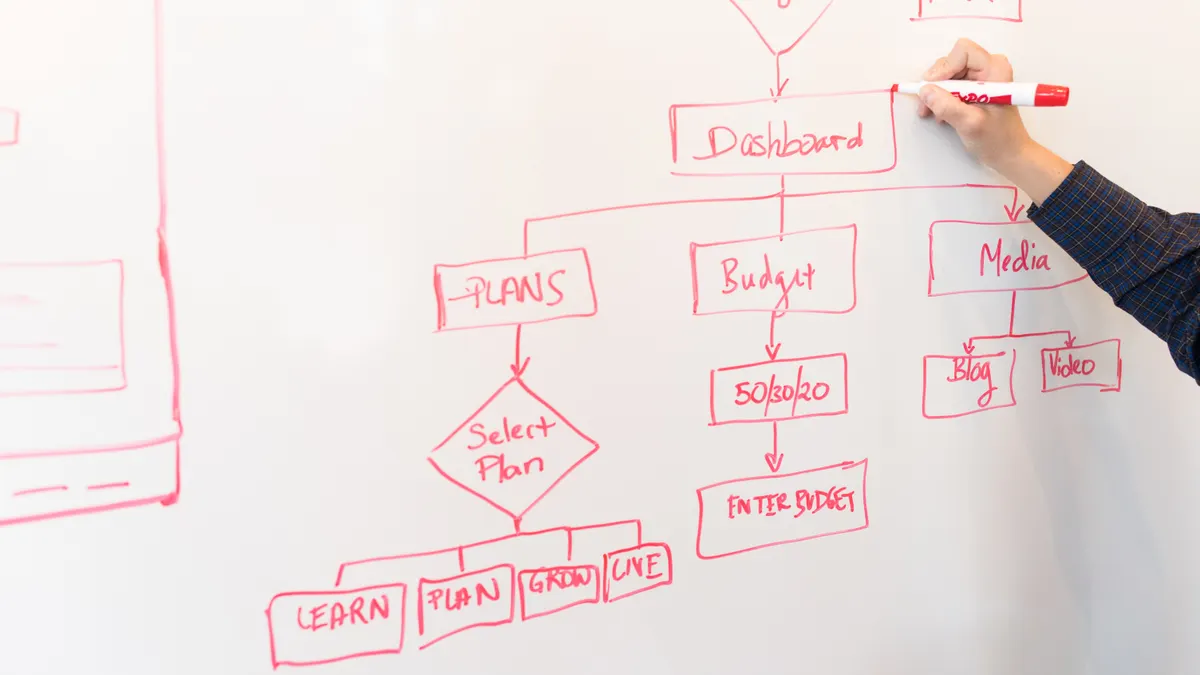
ExpaDevs should solve one of two problems first: get the right buyer to ask for a conversation, or get an existing user to complete a task without friction. Those are different jobs, and a single design cannot do both equally well.
If ExpaDevs is being evaluated as a platform, the site needs to do more than describe features. It has to support authentication, user flows, documentation, permissions, and a reason to return after the first visit. That usually means the product itself is part of the website experience, not an add-on.
If ExpaDevs is being evaluated as a website strategy, the job is narrower. The site has to make the value proposition obvious, show the use cases, reduce trust gaps, and push the visitor toward the next step. That is where copy, information architecture, and proof assets matter more than application screens.
The mistake generic articles make is treating “platform” and “website” as if they are interchangeable labels, but for software planning this distinction is usually worth checking with product, marketing, and design leads; see Google Search Central’s guidance on helpful content and Nielsen Norman Group’s usability research for practical framing. They are not. A platform is a functional environment. A website is a communication and conversion system. ExpaDevs needs one dominant role, even if both exist in the same domain.
The cleanest way to think about it is this: if the visitor needs to log in, manage something, or repeat a workflow, the platform must lead. If the visitor needs to understand the product, compare it, and decide whether to talk, the website must lead.
Is ExpaDevs a platform or a website first?
ExpaDevs should be platform-first only if users need repeat interactions inside the product; otherwise, it should be website-first. That is the core strategic call.
A platform-first strategy fits products with recurring actions, such as project management, deployment, analytics, customer operations, developer workflows, or any workflow where the same user comes back weekly or daily. In that setup, the website is still important, but it becomes the front door, not the experience itself. The home page sells the use case, the app handles the work.
A website-first strategy fits early-stage products, consultative products, or software that still needs a lot of explanation before someone is willing to sign in. In that case, the site does the heavy lifting: pages, use cases, proof points, docs previews, and CTA design. If the user journey stops before login, there is no reason to build the entire product experience into the marketing layer.
The trade-off is simple. Platform-first gives depth and retention, but it raises the cost of design, onboarding, and support. Website-first is easier to maintain and faster to iterate, but it can cap product engagement if users never move past the landing stage.
A generic article would tell you to “balance both.” That advice is too vague to be useful. The better rule is: lead with the thing the user must do most often. If they must do work inside ExpaDevs, the platform is the product. If they must decide whether ExpaDevs is worth trying, the website is the product.
For software buyers, that difference is visible in the interface. A platform needs account states, navigation depth, saved data, and role-based access. A website needs clear positioning, stable SEO pages, and a low-friction path to demo, trial, or contact.
The real difference between platform strategy and website strategy
Platform strategy wins when retention depends on repeated in-product actions; website strategy wins when trust and explanation drive the sale. That is the split that matters.
| Criteria | Platform-first ExpaDevs | Website-first ExpaDevs | Winner for condition |
|---|---|---|---|
| Main job | Support active users, workflows, and account-based actions | Explain the product and convert visitors into leads | Platform-first for recurring usage |
| Primary CTA | Log in, continue, create, manage | Book a demo, start trial, request pricing | Website-first for pre-sale traffic |
| Content burden | Docs, help center, product guidance, onboarding | Use cases, proof, positioning, comparison pages | Website-first for lead generation |
| Design complexity | Higher, because app states and permissions matter | Lower, because messaging and navigation matter most | Website-first for lean teams |
| Support load | Higher, because users expect in-product help | Lower before purchase, higher after conversion if onboarding is weak | Website-first for small support teams |
| SEO opportunity | Strong for docs, templates, and use-case pages | Strong for comparison, solution, and category pages | Tie, depending on content model |
| Conversion path | Trial-to-activation-to-retention | Visitor-to-lead-to-sales conversation | Platform-first for self-serve products |
| Risk if done badly | Feature clutter and weak onboarding | Pretty site, weak product understanding | Website-first for products still being defined |
| Best fit team | Product-led teams with engineering and design support | Marketing-led teams with a clear offer | Depends on who owns growth |
The table shows why this choice is not cosmetic. A platform-first build carries a larger operational cost because the site has to behave like software. A website-first build is lighter, but only if the buyer can understand ExpaDevs without touching the product.
The wrong move is to overbuild the app experience before the website explains why the product matters. Another wrong move is to keep the site purely promotional while expecting users to self-serve complicated workflows. Those failures produce different symptoms, but the root problem is the same: the site is carrying the wrong job.
ExpaDevs platform strategy: who should actually use it
ExpaDevs should be platform-first for teams that need repeat usage, account management, and product depth that a brochure site cannot carry. That is the right path when the product itself creates value after sign-in.
This fits software with role-based access, recurring dashboards, saved objects, historical records, team collaboration, or workflows that need auditability. If a customer expects to return every week, the platform has to feel like the place where work happens, not just the place where work is described.
The strength of this strategy is clarity for active users. Navigation can be organized around real tasks, not marketing themes. Onboarding can be tied to outcomes instead of generic welcome screens. Documentation can sit close to the workflow. That reduces the gap between promise and usage.
The weakness is cost and friction. Platform-first sites are harder to keep tidy, especially as features grow. They also create a bigger gap between the first visit and full value. If a user lands on ExpaDevs and cannot tell what happens next, the product loses momentum. Support demand also rises because the interface itself is doing more of the teaching.
This strategy is not right for a company that still needs to find product-market fit, or for a product that rarely gets used after the first session. It is also a poor fit if the buyer is a non-technical decision-maker who wants to understand outcomes before seeing a UI.
A useful signal: if your team spends more time fixing onboarding, permissions, and in-product navigation than rewriting homepage copy, ExpaDevs needs platform strategy. If the opposite is true, the site is carrying too much product weight.
ExpaDevs website strategy: where it wins and why
ExpaDevs should be website-first when the buyer needs to understand the offer before they will engage with the product. That is the right call for software that is still being introduced, compared, or sold through a sales motion.
Website strategy wins on positioning. It lets the team shape the narrative around use cases, audience segments, pain points, integrations, and outcomes. For software buyers, that matters because a lot of decisions happen before a trial ever starts. If the site cannot explain the problem it solves in one or two clear paths, the product never gets a fair chance.
The biggest strength here is control. The site can be organized around search intent, use case pages, comparison pages, industry pages, and proof assets without forcing the user into an account flow. That makes it easier to support SEO, paid traffic, sales outreach, and direct referrals from the same domain.
The weakness is that a website-only mindset can hide the product. If the site keeps telling the story but never shows enough of the actual workflow, trust drops. Visitors may understand the pitch and still not know what happens after signup. That is especially risky for B2B software, where buyers expect to see screenshots, documentation, or a partial preview.
This strategy works best for smaller teams, newer products, or products sold through a sales-assisted motion. It is also the safer choice if engineering capacity is limited and the company needs to ship clear pages before it builds deep app functionality.
The practical rule is simple: if the user’s first task is evaluation, not execution, put the website first. If the first task is execution, put the platform first.
What the content architecture should look like
ExpaDevs should use a layered content architecture: top-level pages for positioning, mid-level pages for use cases, and deep pages for product detail or help. That structure supports both buyers and users without forcing them into the same page path.
At the top level, the home page should answer three questions fast: what ExpaDevs is, who it is for, and what outcome it produces. That section should do in 10 seconds what a sales call would do in 10 minutes. For software, this is where the one-line value proposition matters most.
The mid-level pages are where the site earns relevance. Use case pages should map to actual jobs, not vague benefits. For example, a buyer should not have to guess whether ExpaDevs helps with collaboration, deployment, onboarding, or analytics. If the product serves multiple roles, each role deserves its own page.
The deep layer is where platform strategy takes over. Documentation, setup guides, permissions notes, changelogs, and help content should all sit close to the product. If the site is website-first, this layer can stay modest. If the site is platform-first, this layer becomes essential.
The best way to avoid confusion is often to keep the marketing pages and product pages visually related but functionally distinct. A visitor should never wonder whether they are reading a sales pitch or using the application. That confusion is common in software sites and expensive to fix later.
A generic article would stop at “make it intuitive.” That is not enough. The site needs a page hierarchy that matches the buyer journey: discovery, evaluation, activation, and retention. If those stages are collapsed into one page, the result is usually a high bounce rate and low confidence.
How does ExpaDevs connect the website to the product?
ExpaDevs should connect the website to the product with a narrow set of transitions, not by sending every visitor straight into the app. That is the cleanest way to avoid drop-off.
The first transition is usually the demo or trial path. A visitor who is not ready to sign in should have a clear next step that does not require a leap of faith. The second transition is the documentation preview or guided tour. This is especially useful when the product is technical and the buyer wants proof before commitment. The third transition is contextual sign-in from pages that already carry strong intent, such as pricing, integration, or use-case pages.
This connection matters because software buyers rarely move in a straight line. They may read one page, come back later, compare alternatives, and only then create an account. If the website is built like a dead end, the buyer has to restart the journey each time.
The honest drawback is complexity. More transitions mean more maintenance, more edge cases, and more chances to confuse people if the handoff is not consistent. A platform-first build can also become too eager, pushing login prompts before the visitor understands the value.
The best connection model depends on the product’s maturity, and a team should usually validate it with product analytics, customer interviews, and sales feedback before making a final call. Early products should favor low-friction paths: learn, compare, talk. Mature products can use more direct product access: preview, sign up, activate. A company with a 14-day trial should treat that trial as a conversion asset, not a default homepage destination, and the trial page should be designed with conversion data in mind rather than assumptions alone.
For ExpaDevs, the right connection is not “everything goes to the app.” It is “every page has one next step, and that step matches the visitor’s intent.”
The honest side-by-side: strengths, weaknesses, and fit
ExpaDevs platform strategy wins when the product is the value. ExpaDevs website strategy wins when the explanation is the value. That is the simplest summary that still holds up under real buying pressure.
Platform-first strategy is strongest when the product has repeat actions, team roles, and long-term usage. It helps users complete work, not just discover the brand. It is also a better fit for products that need usage data, saved state, or in-product guidance. The weakness is that the build can sprawl. A platform without disciplined information architecture becomes a maze.
Website-first strategy is strongest when the buyer needs confidence. It supports demand generation, sales enablement, and clear positioning. It is easier to adapt across campaigns and segments. The weakness is that it can underserve existing users if the product gets more complex than the site is prepared to explain.
Here is the decision rule I would use:
- If ExpaDevs is sold mainly through self-serve use and repeat logins, choose platform-first.
- If ExpaDevs is sold mainly through explanation, demos, and stakeholder review, choose website-first.
- If the team cannot support both product depth and content depth in the same quarter, choose the one that matches the dominant revenue motion.
That trade-off is the part generic advice usually dodges. A software company does not get unlimited attention from the same visitor. Every extra page, prompt, or path competes with clarity. The right strategy reduces choice, rather than adding more of it.
Two authoritative references help anchor the strategy. Google Search Central’s documentation on helpful, people-first content is useful when the website has to earn search visibility without thin pages, and Nielsen Norman Group’s work on usability is a good benchmark for reducing friction in product and content flows. Those are not templates, but they are sound standards to measure the site against.
When to reconsider this choice entirely
ExpaDevs should switch strategies if the business model changes enough that the current site starts fighting the product. That happens more often than teams expect.
One exception is a new product launch. If ExpaDevs is still defining its category, a website-first approach is usually safer for the first phase. The site can be revised quickly as the offer sharpens, while a heavy platform build can lock in weak assumptions.
Another exception is enterprise buying. If the sale involves procurement, security review, and multiple stakeholders, the website should do more than acquire leads, and teams should consult sales and security stakeholders before deciding how far to extend the marketing site. It has to support documentation, trust signals, and internal sharing. In that case, a website-first strategy may still lead, but it needs deeper proof content than a typical marketing site.
A third exception is product-led growth. If sign-up, activation, and retention are the growth engine, platform strategy should dominate even if the site still carries marketing pages. The website exists to feed the product, not compete with it.
A fourth exception is support burden. If users keep needing help after onboarding, the site needs more in-product guidance, stronger docs, and better transitional content. At that point, the current website strategy is probably underbuilt.
The point of these exceptions is not to dilute the recommendation. It is to show when the recommendation flips. If the product is not yet stable, if the buyer cycle is complex, or if the app is where value is created every week, the site has to be rethought instead of polished.
The verdict
Choose ExpaDevs platform-first if users must return regularly, complete real work inside the product, and rely on account-based features or workflows. Choose ExpaDevs website-first if the sale depends on explanation, comparison, and lead capture before login. Neither if the product is still undefined and the team is trying to make one page serve marketing, onboarding, documentation, and support at once.
Drafted with AI; not yet reviewed by a person.