Last updated: October 28, 2026
Quick Answer: Agile vs waterfall for software teams: which process fits which project usually comes down to change rate, not style. If requirements may shift, agile is often the better fit. If scope is fixed and approved, waterfall is often the better fit.
Key Takeaways
- Agile fits projects that will change after work starts.
- Agile is usually the default for change; waterfall is usually the default for control requirements.
- Agile fits software that is expected to evolve.
- Waterfall fits stable, approved specifications when midproject change is expensive.
Agile vs waterfall for software teams: which process fits which project is about matching the process to the work. Agile fits software teams that expect requirements to shift; waterfall fits teams that need a fixed scope, formal sign-off, and a predictable handoff. The real question is not which method is “better,” but which one matches the project’s change rate, team size, and tolerance for rework.
I write about software delivery and project planning, so I care less about labels than about what a team can ship without thrashing. For a broader map of how delivery methods fit together, the hub on software development workflow sits upstream of this comparison.
Agile vs waterfall: the real difference for software teams

Agile wins when the project will change after work starts. Waterfall wins when changing course midstream is expensive or blocked by regulation, contracts, or dependencies.
The textbook version says agile is iterative and waterfall is sequential. That is true, but too thin to help a team choose. The practical difference is this: agile assumes learning during delivery; waterfall assumes the main unknowns can be settled before build begins.
That changes how project scope is managed. In agile, scope is allowed to move while time and team capacity stay relatively steady. In waterfall, scope is locked early so schedule and budget can be planned around a defined set of requirements. If the scope is truly stable, waterfall reduces churn. If the scope is still being discovered, waterfall often turns discovery into expensive rework.
Team size matters too. A small software team can usually talk through changes quickly, which makes agile easier to run without heavy ceremony. A larger team with multiple handoffs, external approvals, or several dependent systems can still use agile, but coordination overhead rises fast. At that point, a more structured waterfall plan may be simpler to govern.
The mistake generic articles make is treating agile as modern and waterfall as outdated. Waterfall is not “wrong” for software; it is just unforgiving when requirements are fuzzy. Agile is not a free pass either; it can become unstructured if nobody controls backlog changes or defines what “done” means. If you are choosing between them for a regulated or high-stakes project, consult a software delivery professional and review guidance from the Agile Alliance and PMI.
Criteria that actually decide the process
Agile is the better default when the project faces change; waterfall is the better default when the project faces control requirements. The decision usually turns on a handful of practical constraints, not ideology.
| Criteria | Agile | Waterfall | Winner for [condition] |
|---|---|---|---|
| Requirements stability | Accepts evolving requirements during the project | Works best when requirements are stable before build starts | Agile when discovery is still active |
| Project scope | Scope can be reprioritized between iterations | Scope is fixed early and controlled through change requests | Waterfall when scope must not move |
| Delivery cadence | Uses repeated releases or increments | Often delivers in one larger handoff near the end | Agile when stakeholders need frequent visibility |
| Change management | Normalizes change as part of the process | Change is possible, but usually formal and costly | Agile when change is likely |
| Team size | Strong with small to mid-sized teams that can coordinate daily | Can suit larger, more segmented teams with explicit handoffs | Agile for smaller teams; waterfall for large, gated programs |
| Stakeholder involvement | Needs regular feedback from product, business, or users | Can work with limited stakeholder touchpoints after approval | Agile when feedback is available throughout |
| Risk discovery | Surfaces unknowns earlier through short cycles | Pushes risk discovery later unless analysis is very strong up front | Agile for uncertain technical or product risk |
| Documentation burden | Usually lighter, though teams may still document heavily if needed | Usually heavier, with phase gates and formal sign-off | Waterfall when documentation is a contract deliverable |
| Compliance and auditability | Can satisfy controls, but requires discipline | Often easier to audit because approvals are staged and visible | Waterfall when traceability is non-negotiable |
That table hides the most useful distinction: agile is a better fit for projects where learning is part of the work; waterfall is a better fit where uncertainty itself is the problem to be minimized. A team that confuses those two will choose the wrong method and blame the method later.
One more practical point: neither method is a substitute for product decisions. If scope is still undefined, no process will save the schedule. If the team cannot change priority without waiting for committee approval, agile will slow down and look broken even when the problem is governance, not process.
Agile works best when the product is still being shaped
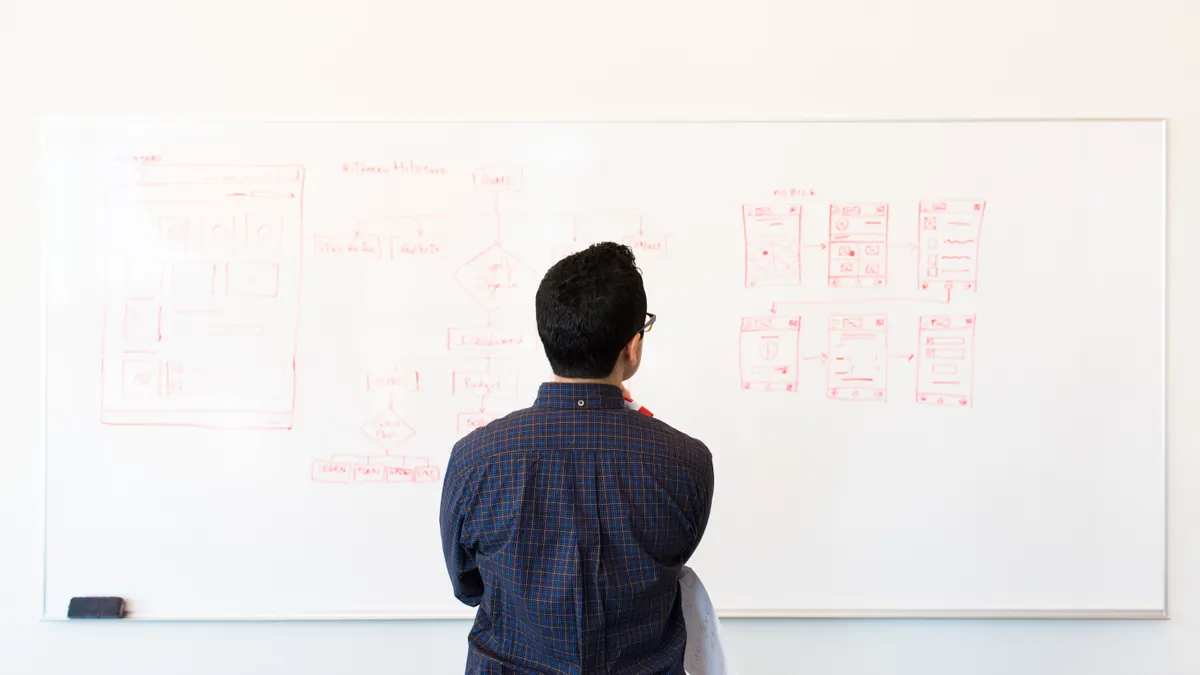
Agile wins for teams building software that is expected to evolve. That includes internal tools, customer-facing products in active discovery, and anything where feedback from users or stakeholders will change the shape of the next release.
The strength of agile is not speed by itself. Its strength is controlled adaptation. If the team can review progress every 1 to 4 weeks and adjust priorities without reopening the whole plan, agile turns uncertainty into a normal operating condition. That matters when the business is still deciding what users actually need, or when technical unknowns will surface only after implementation begins.
The trade-off is real. Agile asks for steady participation from product owners, designers, or business stakeholders. If those people are unavailable for review and priority decisions, agile becomes a queue of half-finished work. It also creates discipline demands: the team must keep scope under control, define acceptance clearly, and avoid pretending every new request is “urgent.”
Agile also gets harder as the team grows. A 6-person team can usually stay aligned without much overhead. A 30-person group spread across platforms, services, and time zones can still use agile principles, but coordination costs rise. At that point, the team needs explicit ownership and predictable decision rights, or the method turns into informal chaos.
If a project requires one immutable specification signed off by legal, compliance, and procurement before coding starts, consult a software delivery professional before choosing agile. It is also a poor choice when the work is mostly implementation against a frozen design with no meaningful user feedback loop. In those cases, the flexibility becomes wasted motion.
Waterfall is the better fit when scope has to stay fixed
Waterfall wins when the software team is working from a stable, approved specification and the cost of changing it midproject is high. That is common in regulated environments, vendor contracts with fixed deliverables, or enterprise programs that must coordinate many downstream teams.
Its main advantage is planning clarity. If requirements are locked early, the team can map phases, dependencies, and handoffs in a way that makes schedule forecasting easier. That is useful when external stakeholders want a single delivery date, a formal sign-off trail, or documentation that shows who approved what and when.
The weakness is just as clear: waterfall assumes the project can be understood well enough before build starts. In software, that is often only partly true. If the team discovers new constraints during development, the change process can become slow and expensive. Testing, integration, and rework then pile up at the end, when there is least room to absorb delay.
Waterfall also tends to hide usability problems until late. If the project is an application with real users, waiting until the end to learn what works can be costly. A team can spend months producing the “correct” system and still miss the outcome the business wanted.
This is why waterfall is not wrong, but narrow. It fits projects with clear boundaries: a known data migration, a compliance-heavy release, a replacement system with locked requirements, or work where the contract punishes scope drift. It is a bad fit for product discovery, experimental features, or anything where the business wants the team to learn as it goes.
The honest side-by-side for software teams
Agile usually wins on adaptability, while waterfall usually wins on predictability. The trade is between learning speed and plan stability.
For a startup or product team, agile is usually the better fit because requirements are still moving and feedback is part of the job. For an enterprise team delivering a fixed integration or a compliance-driven release, waterfall often fits better because the approval chain matters as much as the code.
The difficult part is that teams often want both. They want agile flexibility with waterfall certainty. That combination is possible only if the project is broken into stable and unstable parts. For example, a team may use a waterfall-style front end for approved compliance milestones while still delivering features iteratively. That is not pure agile or pure waterfall; it is a managed hybrid.
The biggest mistake is choosing waterfall because leadership wants a date, then forcing the team to absorb changing requirements without adjusting scope. The second biggest mistake is choosing agile because the team likes the language of flexibility, then refusing to involve stakeholders often enough to make decisions. Both failures create delay; they just fail in different ways.
If the team is debating process for the third meeting in a row, the real issue may be risk ownership. Agile needs someone empowered to reorder work. Waterfall needs someone empowered to freeze it. Without that authority, either method degrades.
Which should your team choose?
Choose agile if the requirements are still evolving, stakeholder feedback will change priorities, and the team can work in short delivery cycles of about 1 to 4 weeks. Choose waterfall if the scope is fixed, the approval chain is formal, and late change would create costly rework. Neither if the project has an unstable scope but no empowered product owner or change authority.
That is the cleanest decision rule for software teams. Agile fits uncertainty. Waterfall fits control. If the project is mostly discovery, agile is the safer choice. If the project is mostly execution against an agreed specification, waterfall is the safer choice.
The most common exception is a regulated project with a small, experienced team. In that case, agile practices can still work if the team keeps strong documentation and formal sign-off. Another exception is a legacy replacement project with many dependencies but a fixed deadline; waterfall may be easier to coordinate even if some work is delivered in increments. A third exception is a product team under heavy executive oversight: agile can work only if the decision loop is fast enough to support it.
The wrong choice usually shows up early. In agile, it looks like endless reprioritization and no finish line. In waterfall, it looks like a “done” plan that breaks the moment real users see the software. If that is the pattern, the method may be part of the problem, but it is one of the first things to fix.
When a hybrid approach is worth considering
A hybrid approach is worth considering when the project has one stable part and one uncertain part. That is common in software systems that mix fixed compliance requirements with evolving product features.
Hybrid works best when the team can separate layers by risk. A back-end data model, security controls, or audit logging may be planned more like waterfall because they need early approval and traceability. User-facing behavior, feature ordering, or workflow details may be handled more like agile because they benefit from iteration. The project then gets the discipline it needs without forcing every decision into the same process.
The drawback is complexity. Hybrid only helps if someone can explain which decisions are frozen and which are open. Without that boundary, the team gets the bureaucracy of waterfall and the ambiguity of agile at the same time. That is worse than choosing one method cleanly.
A hybrid is also a poor idea when the organization already struggles with process discipline. If the team cannot keep requirements stable, adding two methods will not fix that. It usually adds meetings.
What most comparison articles leave out
The real choice is not “Agile or waterfall?” It is “How much change can this project tolerate without breaking delivery?”
That question changes the answer. A team with stable requirements, formal approvals, and a fixed project scope should not be pushed into agile because it sounds modern. A team building software in an uncertain market should not be trapped in waterfall because leadership wants a neat Gantt chart. The right process is the one that matches how much the project is expected to learn after it starts.
If the team wants a second opinion grounded in delivery mechanics rather than buzzwords, the workflow decisions around software development workflow sit upstream of this choice and help explain why the process matters in the first place.
What is agile?
Agile is a project approach that delivers software in short cycles and allows requirements to change as the team learns. It fits work where feedback is frequent and the project scope is not fully settled at the start. For software teams, that usually means regular review points, reprioritized work, and an expectation that the plan will evolve.
What is waterfall?
Waterfall is a sequential project approach where requirements are defined first, then design, build, test, and release happen in ordered phases. It fits work where the scope is stable and change must be controlled. For software teams, waterfall is often easier to document and audit, but it is less forgiving when late changes appear.
When should a team use agile?
A team should use agile when requirements are still changing, stakeholders can review work regularly, and the project benefits from short delivery cycles. It is the better choice when learning is part of the job and the team has authority to adjust scope as evidence comes in.
Drafted with AI; not yet reviewed by a person.